
Off-grid Solar Power Systems
Residential off-grid solar systems
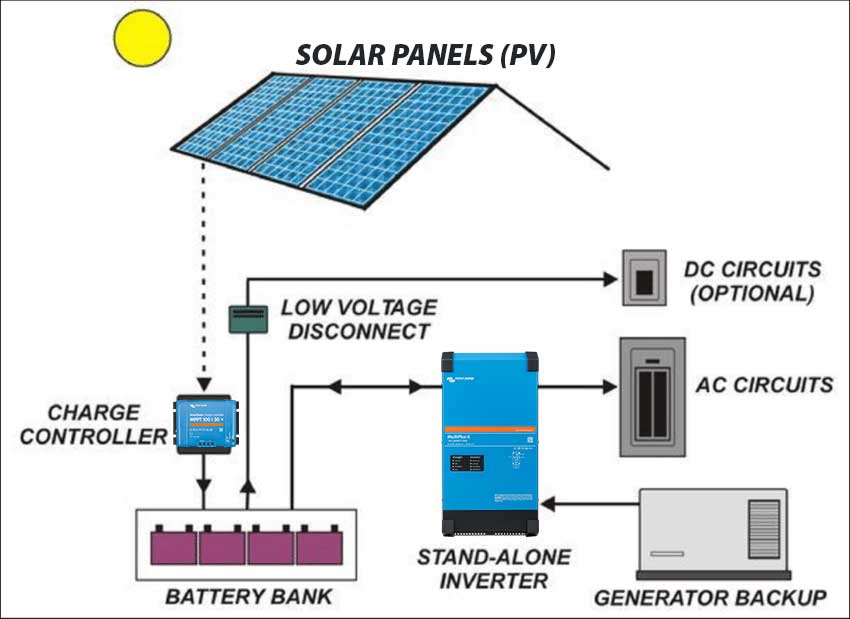
A residential off-grid solar system allows your home to operate completely independent of the utility grid. It generates, stores, and manages energy on-site, so you can power your home reliably without relying on external supply. In addition, these systems are designed around your actual energy usage to ensure consistent performance.
How an off-grid system works
- Solar panels generate electricity during the day from sunlight, and they supply energy directly to the system.
- A solar charge controller regulates the energy flow and protects the battery bank.
- Battery storage stores energy for use at night or during low solar production, ensuring continuous supply.
- An inverter converts stored DC energy into usable AC power for household appliances, so your home runs as normal.
- A backup generator can also support the system during extended periods of low solar availability.
Key components
- Solar panels: sized based on daily energy demand and available sunlight, ensuring efficient generation.
- Battery storage: lithium (LiFePO4) batteries provide long life, stability, and reliable performance.
- Inverter/charger: manages energy conversion and system control while supporting additional power sources.
- Monitoring system: provides real-time system performance and usage data, allowing better control.
- Protection and distribution: includes wiring, breakers, and safety devices to ensure safe operation.
System sizing considerations
Correct system sizing is critical for reliable performance. Therefore, system design focuses on the following:
- Daily energy consumption (kWh per day), which defines system capacity.
- Peak load requirements, so the system can handle simultaneous usage.
- Autonomy requirements, ensuring power during low solar conditions.
- Site-specific solar resource and installation conditions, which influence system design.
Benefits of going off-grid
- Complete independence from grid outages and load shedding, so your home remains powered.
- Predictable long-term energy costs, which improve financial planning.
- Clean, renewable energy generation, reducing environmental impact.
- Ideal solution for remote or underserved locations where grid access is limited.
Important considerations
- Energy usage must match system capacity, otherwise performance may be affected.
- Initial investment is higher, as battery storage forms a key part of the system.
- System design must prioritise efficiency and reliability to ensure long-term performance.
- Backup planning, such as a generator or load management, improves overall system resilience.
Helpful links and next steps
Showing all 3 results
-
Sale

48V 15kVA 36kWh 9810Wp Off-Grid Solar System
Original price was: R263 966,37.R239 371,25Current price is: R239 371,25. excl.VAT Add to cart -
Sale

48V 3kVA 10kWh 2730Wp Off-Grid Solar System
Original price was: R63 145,83.R57 405,30Current price is: R57 405,30. excl.VAT Add to cart -
Sale

48V 5kVA 15kWh 4900Wp Off-Grid Solar System
Original price was: R97 668,63.R89 095,96Current price is: R89 095,96. excl.VAT Add to cart